Julian's Dino Petting Zoo
Meet The Dinosaurs

Ankylosaurus
Blackie (or Anky)
Look out for that tail! Ankylosaurus was made to be an armor protected dinosaur. This plant eater walks slowly. Ten of these dinosaurs could take on a T Rex.


Mussasaurus
Mousie
Mousie will be small enough to fit in your hand when born, but will grow into a massive dinosaur.

Tupuxuara
Wakamara
Mom's favorite flying dinosaur. Watch out for the pecks!

Protocratops
Babyface
This cute dinosaur can protect itself with the horns on its head. This dinosaur can knock down a triceratops by ramming into him.

Diploducus
Whippy
This incredible dinosaur can whip its tail at predators if they attack. You need shin pads in order to train Whippy when she's a baby.

Giraffititan
Tall Boy
This is the tallest dinosaur ever. We will teach it to bend it's neck down so that Julian can teach you how to ride on the Giraffititan

Shunosaurus
Rocket Tail
This sauropod dinosaur looks like a big one! He can run 5 mph and his tail looks like a rocket. Even grown ups can't reach up to his neck!!

Coelyphysis
Big Paw
This little dinosaur is fast and uses his tail for balance. He has little arms with big paws.

Dracorex
King Face
He gets his name from Emerson "the King" and because his head looks like he's wearing a crown.
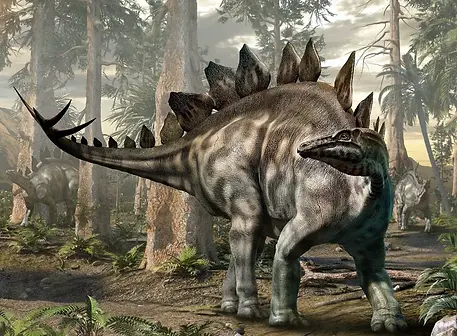
Stegosaurus
Spikey (or Steggy)
This dinosaur uses the plates on his back to communicate with other dinosaurs. Isn't that cool?

Mononykus
Buggy
This dinosaur is a pest control machine! It'll eat all the bugs you yard..and maybe in the house. If anyone wants this cute tiny dinosaur they can have it. It has feathers on it's head and tail.

Struthiomimus
Sea
This is the fastest dinosaur ever! Isn't that cool too? This dinosaur can run 45 mph! They had to learn to run faster and faster to escape the bigger and stronger carnivore predators like the velociraptor and the T Rex.

Pterodaustro
Sky
Look out! Sky can swoop down from the sky to catch fish.

Compsoganthus
Bompy
This is our only carnivore. Good thing he's only the size of a chicken! Careful or he'll nibble on your ankles.

Brontosaurus
Big Feet
The brontosaurus is playful and kind and you can slide right down his long neck. Sometimes when you look up at his neck it looks like its reaching for the sky.
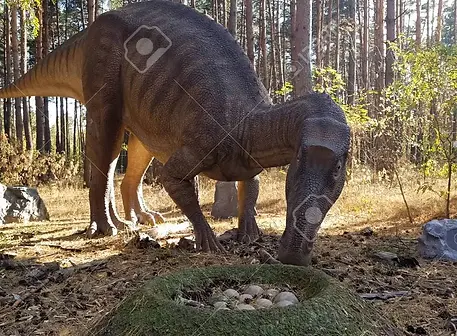
Maiasaurus
Good Mother
The best mom ever amongst the dinosaurs! Her name is Good Mother because they take care of their babies so very very well. When mom goes looking for food then Dada gaurds the nest.

Stenopelix
Little Compy
This may look like a compy hunting, but it's a fast little herbivore from Germany and weighs about 22 pounds.

Ouranosaurus
Round Back
This unique dinosaur gets his name from the round sail on his back. This dinosaur was found in the Sahara Desert in Africa. He weighs 7 tons and is 28 feet long.

Jeholopterus
Jello
Jello is another insectivore who will work with Buggy and Stripey to eat all the bugs in the yard. This one looks a little bit like a bat.

Brachiosaurus
Long Boy
Long boy weighs almost 103,000 pounds and is 82 feet long. Incredible! Look at the pronounced bump shape on the top of his head. The tail is very long too.

Nedoceratops
Tornado
Tornado is fierce. This dinosaur is tougher than the triceratops. Horns help protect it from hungry carnivores. Sometimes birds will travel along and sit right on it's back.

Plateosaurus
Plate
This dinosaur can stand on its big strong hind legs in the lake. It uses bipedal and quadrupedal locomotion which means it walk on both 2 and 4 legs. It likely moved on all fours when grazing for food, and could rear up on its hind legs when it needed to reach higher foliage or to defend itself from predators. Plate has little stripes on his back.
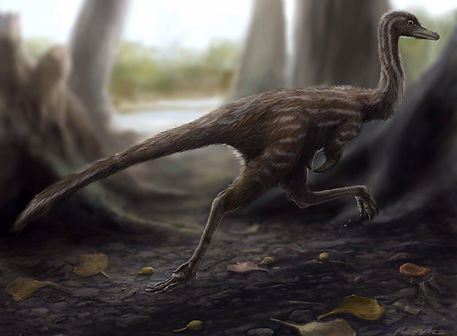
Shuvuuia
Shoe
Shoe has excellent vision for night hunting. This bird like dinosaur is 6 1/2 feet long, but only weighs 6 pounds!

Yinlong
Yinny
The name Yinlong (pronounced YIN-long) comes from the Chinese words "yin" (meaning "hidden") and "long" (meaning "dragon"). It was named this way because its fossils were hidden among rocks in the Xinjiang Province of China.

Oryctodromeus
Ricky
This dinosaur likes to run and likes to dig a comfy warren where it can live. A whole family would dig a burrow together.

Muttaburrasaurus
Mutty
This Australian dino has a unique head that allows it to make different sounds to communicate with other dinosaurs. He weighs almost 3 tons or 6000 pounds!
_-_JuraPark_Baltow.jpeg)
Euoplocephalis
Euey
Euey has a club for a tail. You can tell its part of the ankylosaurus family from his armor and tail.

Iguanadon
Thick Neck
This dinosaurs fossils have been found all around the world. Even in North America! Thick Neck is able to walk on hind legs or on all fours, and has a thumb spike to help with foraging.

Sinoceratops
Frilly Horns
He might look sad, but he's not. He will be a huge dinosaur, over 20 feet long and loves to show off the frills on top of his head!

Pachycephalosaurus
Bangy Head
Bangy head has a skull that is 10 inches thick! He and his buddies like to crack those heads together. He is 15 feet long and 990 pounds.

Archaeopteryx
Archie
Even though Archie spends most of the time on the ground he can still fly or glide from time to time.

Parasaurolophus
Loudy Noise
If Loudy Noise ran into danger she would alert her heard by using the crest on her head to make a loud noise.

Pachyrhinosaurus
Patchy Batchy
Pachy is in a movie called "Walking with Dinosaurs" which you can find on Disney+. He can also bang into other dinosaurs and use his head to protect himself from a Gorgosaurus. We can't have a gorgosaurus because it would eat the other dinosaurs.

Apatosaurus
Patti
Patti may grow up to be 90 feet long and 20 tons, but she still has hollow bones in her neck which makes it easier to lift her head up to a tall tree.

Amargasaurus
Amargie
Amargie has lots of spikes coming right out of her back bones. If a dinosaur bites her it would their mouth.

Nasutoceratops
Horns First
Horns First gets his name because his horns are in front. He looks like a yoga teacher in this picture!

Aardonyx
Basketball
This dinosaur has a huge mouth for eating a lot of plants. Looks like he's playing basketball!

Orodromeus
Mountie
His name means mountain runner. If Mounty needs to escape a predator he would use his incredible speed.
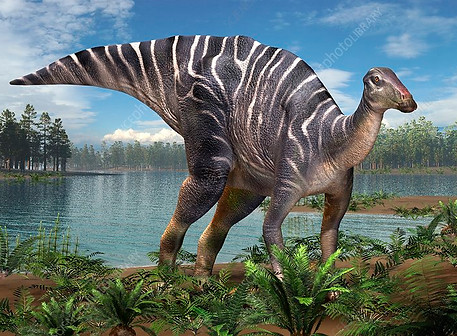
Hadrosaurus
Running Feet
This bulky lizard like dinosaur is duck-billed and it is the first dinosaur to have its bones displayed in a museum in Philadelphia in 1868.

Scansoriopteryx
Stripey
This is another flying insectivore who loves trees. Be careful if you touch him he might fly away. Julian will have a leash for him.
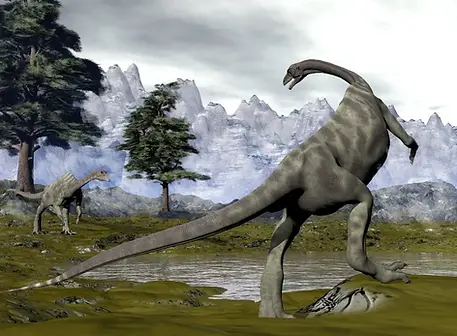
Anchisaurus
Banky
This is another flying insectivore who loves trees. Be careful if you touch him he might fly away. Julian will have a leash for him.
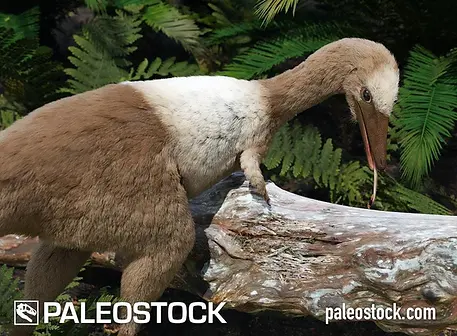
Albertonykus
Feather Tail
This dinosaur is 2 feet long and has feathers on its tail. Albertonykus bones were found in Canada.

Patagotitan
Titan
This dinosaur is so enormous that it's heart is the size of a human!! It had to be that big to pump blood to all the different parts of it's body.
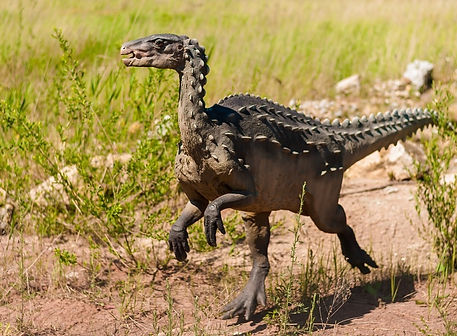
Kongonaphon
Small Body
This is our smallest dinosaur. It will be only 4 inches tall when it is full grown!

Triceratops
Pokey
Pokey's horns and frills will change shape and size as he gets older. The triceratops lived at the same time and in the same areas as the T Rex. They were fierce rivals! Triceratops was a large dinosaur, measuring up to 30 feet in length and weighing as much as 12 tons.

Ammosaurus
Emmy
Emmy is a cousin of Banky and is pretty small compared to the other sauropods.

Puertasaurus
Very Long Neck
Whoa what a neck! Hollow bones inside his neck allow him to pick up his head. You can ride on his neck and he will walk very slow. This dinosaur weighs almost 100 tons!

Parksosaurus
Park
The first bones of a Parksosaurus were found just 100 years ago. Even though Park looks vicious she is a gentle herbivore who weighs 100 to 200 pounds.

Styracasaurus
Hooky
Hooky is big and tough and strong. Styracasaurus has a strong beak, and the name means 'spiked lizard', but we call him Hooky because the horns are shaped like hooks.

Heterodontosaurus
Donty
Donty will be hard catch in Dinos on the Loose, running up to 25 mile per hour! This dinosaur is small, weighing just about 8 pounds.

Minmi
Minmi
Minmi is from Australia and weighs 1100 pounds. He is small compared to his Ankylosaur cousins, but still a big dinosaur. You can ride on him with a special saddle Julian's dad can give you.

Nigersaurus
Nigey
Nigey is from Africa. Nigersaurus haS a wide, square-shaped muzzle filled with more than 500 small teeth, making it well-adapted for efficiently cropping vegetation close to the ground.

Gigantspinosaurus
Spiney
Spiney has large, sharp, and outward-pointing spines on its shoulders, which were likely used for defense or display purposes.

Othnielosaurus
Othey
This dinosaur lived in the USA! Othey has bird-like feet and weighs 50-100 pounds
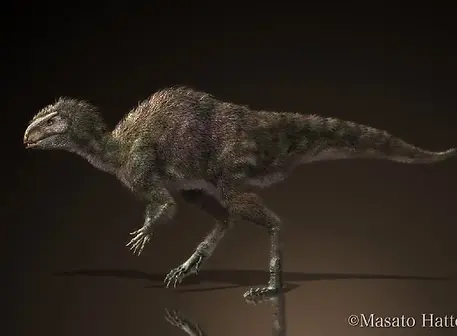
Paisanosaurus
Pizza
3 and 1/2 feet in length and one of the earlier dinosaurs. 230,000,000 years ago was the last time Pizza roamed the earth. Welcome back!

Miragaia
Mirror
Mirror is 20 feet long and uses the spikes on his back for protection. You'll hold on to the two big horns when you ride him.

Europasaurus
Rope
Rope is small sauropod dinosaur who roamed around in Europe.

Saltasaurus
Shockamonia
Shockamonia was unique among sauropods as it had bony armor embedded in its skin, similar to the kind of protection seen in ankylosaurs. This armor included both small nodules and large plates.

Sauroposeidon
Soapy
Soapy is the tallest dinosaur ever standing more than 60 feet. He has a very very long neck. It might be hard to slide down because of the many small spikes on his neck.

Ctenochasma
Chazzy
Chazzy likes to fly around with Sky and catch fish. He's found in Europe and has 4 foot wing span. That's almost as big as a bald eagle.

Mamenchisaurus
Small Head
Small head has 19 cervical vertebrae or neck bones as compared on 7 in humans. It also has a very small head on its long neck. Interestingly it also has a club on the end of its tail which can be used to protect itself.

Scelidosaurus
Cell
Cell is one of the first armored dinosaur. Scutes are the bony parts of the armor. It's so hard that a predator could snap its teeth on the scutes.

Isanosaurus
Eye
Eye has a short neck for a sauropod, but could stand on hind legs to reach up higher. It has small spikes along its neck, back, and tail.

Rhamphorhynchus
Knife
The small vane at the tail tip helped Knife twist and turn in the air. Very agile for a flying dinosaur!

Pterodactylus
Crash
Crash is a wing walker, which means he could walk on all fours when on land. Also, he has fur all over his body!

Elasmosaurus
Last
Last is a swimming plesiosaurus with unique features. It ambushes prey by swimming below and reaching up with its long neck. When he jumps of the water he could spin or flip.

Pleurosaurus
Play
Play is a very interesting swimming herbivore. He had a semi-aquatic lifestyle which it could live in water and on land! It's like a penguin!!

Therizinosaurus
Zee
Zee has giant killing claws used to defend himself from predators. He might look like a carnivore, but he really is an herbivore!

Simosuchus
Suitcase
Suitcase looks like a pug-nosed crocodile, and is pretty small, about the size of a medium sized dog. Suitcase lives on land most of the time.

Gargoyleosaurus
Garg
Garg is a cousin of Anky and Euey. He moves very slowly and relies on his armor to protect him. He gets his name because he looks like a gargoyle!

Moschops
Chops
Chops is part of a group of a prehistoric reptile called therapsids, and his face looks like a calf - which is why they named him moschops (calf-face).

Lystrosaurus
List
List is one of the most resilient prehistoric creatures in the world. The Lystrosaurus is as big as a pig or a large dog, and was able to survive on every continent. It even survived the meteor strike that killed almost all living creatures!

Juresanites
Julian
If you need a break from the dinosaurs you can go swimming with Julian. This prehistoric creature is named after Julian!

Hypsilophodon
Hips
Hips is about the size of a turkey, and is very speedy and agile. Top speed 30 miles per hour!!

Trachodon
Track
The trachodon was one of the first dinosaur fossils ever discovered. Track has a distinct duck bill and rough teeth for mashing up leaves.

Gryposaurus
Grip
Gryposaurus is another unique dinosaur with a crest on its nose. Grips dinosaur name means "hook-nosed lizard".

Eocursor
Dawn Runner
Julian will wake up early and go for a run with this dinosaur! Dawn runner is pretty small and quick.

Leaellynasaura
Lay
Lay is most comfortable in cold weather, however bones of leaellynasaura were found in Australia.
.jpeg)
Brachylophosaurus
Brachie
Brachie is 30 feet long with a large skull crest on her head.

Stagonolepis
Stag
Stag has a skull that is short and deep and ends in a shovel-like snout that is useful for slurping bugs.

Dicraeosaurus
D
D has a bony ridge on his back to protect himself. D also has a shorter neck than most of the other sauropods.

Lesothosaurus
Tho
Tho can't chew his food with teeth like other dinosaurs, instead he breaks it up using his beak. He has long legs for running.
Apply Today
This is a Paragraph. Click on "Edit Text" or double click on the text box to start editing the content.
123-456-7890